
The first rule they teach you in flying is fly the airplane. Aviate, navigate, communicate, in that order. A warning light comes on, the radio gets busy, a passenger asks a question, the weather changes. None of it matters if nobody is flying the airplane. Pilots have gotten into serious trouble staring at a burned-out light bulb while the airplane slowly wandered off.
Autopilots today are amazing. They'll hold altitude and heading more precisely than most of us can by hand, and they'll fly a whole approach without getting tired. But the autopilot only knows what it's been told. It will fly a perfectly smooth line right where you pointed it, even when where you pointed it is wrong. So the pilot in command is still in command when the autopilot is on. Good pilots keep their hands close to the controls and their head in the airplane, and they know exactly how to click it off and take over.
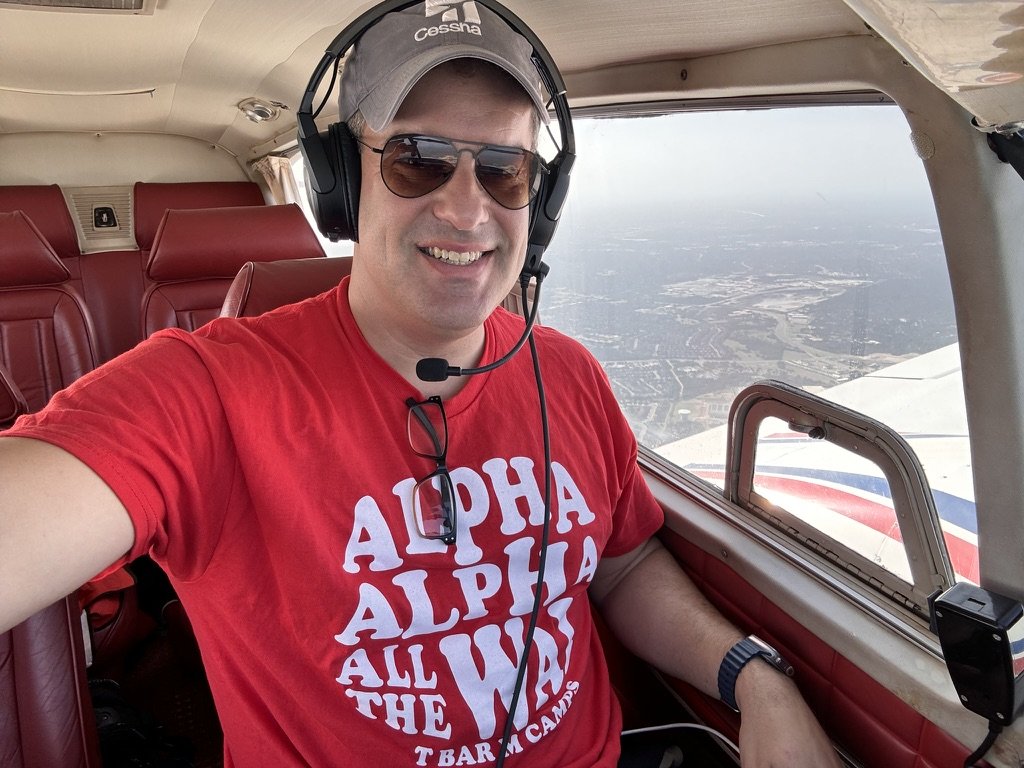
I think about that every time somebody asks me about AI in insurance. And this fall two guests on the podcast, one in claims and one in underwriting, described running their shops the same way.
Claims Is a Grind
Dave Fernandez got into insurance because his car broke down. He was out of college, waiting tables, and needed a job and a car at the same time. He opened the Boston Globe and found an ad for a claims rep trainee at Progressive. It paid $22,000 a year and it came with a Volvo 240. "My problems are solved," he said. He didn't really know what a claim was when he started, and he stayed eighteen years.
Today Dave is Chief Claims Officer at Kingstone Insurance in New York, and I sat down with him for Episode 184. His first lesson from Progressive is that claims quality never takes a day off. There's no renewal season and no slow quarter. In the first quarter of this year Kingstone had eleven declared catastrophes in New York, mostly two huge snowstorms and a long stretch of brutal cold. Frozen pipes are the worst kind of claim because nobody knows the pipe froze until it thaws and the water is already running.
Dave put it plainly: You don't make claim accuracy an initiative for 2026 and then do something else in 2027, you do it every single day.
My dad always said you can have faster, better or cheaper, just pick two. Our industry is asking claims organizations for all three at once, while regulators, reinsurers and clients ask for more data on top of it. That's the pressure every claims leader I work with is under.
Two or Three Things at a Time
Dave's answer is discipline: Kingstone never works on more than two or three improvements at once, and they get each one to a great place before they start the next. He's watched a lot of companies run plan, do, check, adjust as "plan, do, walk away." They go live, call it done, and move on before anybody checks whether the benefit actually showed up.
When Kingstone replaced its claims system, they did it in four months with a small team that was trusted to make decisions. No two-hour Friday steering committee. "There was not a single slide for that whole thing." They pulled their most experienced adjusters into testing, and those adjusters went back and told their friends it was going to be better. That did more change management than any memo. And when the team got a call wrong, they fixed it and kept moving, because, as Dave said, "making no decision is worse than making a suboptimal decision."
The part I wish every claims shop would hear is about mistakes. If you're making decisions, you're going to make some bad ones. "Nobody bats a thousand." If people are afraid to admit a bet didn't work, they spend six months defending it instead of fixing it. In my experience the first three months after go-live are where new ideas die, and the people who never wanted the change will use every hiccup against it. You have to know the difference between rapids and the wrong river.
Managing the Bots
My podcast co-host, Rob Galbraith, sat down with Carrie Coronado for Episode 187. She runs workers' comp underwriting and data analytics at Care West Insurance, and she has used a predictive model in comp underwriting there for years, and she has always treated it as a tool. It doesn't set the price and it doesn't replace the underwriter. For four years the model said certain accounts would perform and her underwriters disagreed. The history settled it. "It's proved out that four years later, we should have been writing this all along." She sold the model to her executives with simple math. About two loss ratio points on a $25 million book, for $18,000 a year.
But her worry is the one more people should have. What happens when the model learns the wrong lesson from one bad claim? "Does the model now decide, well, we shouldn't write anything that has zip lines?" One severe loss and a whole class of camps is gone, because a machine generalized from a single data point. She calls the job managing the bots, and she doesn't think the industry respects it enough yet.
So she tells her team, especially the ones who grew up with technology, that they're allowed to push back. "This doesn't seem right. Just because the computer says it's right, it doesn't feel right to me." When a longtime member of her team asked what AI meant for their job, her answer was "We're gonna elevate you."
Human in Command
I told a room full of self-insured fund leaders in Sonoma this month that anybody telling you AI will replace your adjusters is wrong. Use it to take the menial work off their plates so they spend more time on the phone with injured workers. Treat it like a really good autopilot. Let it do the work it's good at, keep your hands close to the controls, and know when to click it off. Every claim and every underwriting decision still needs a human in command, and Dave and Carrie are both running their shops that way.
Dave's advice for a young adjuster is to learn the technical side of claims cold and find a mentor. Mine was Skip Brechtel. He taught me most of what I know about insurance, and when he passed, more than a hundred business people came to his funeral and said he'd mentored them too. The technology is going to keep changing what an adjuster does all day, and somebody still has to teach the next one when the computer is wrong.
So find a mentor. If you've been in this business a while, go be one. And whatever the computer says, fly the airplane.
If this one hit home, I'd love to hear how your team keeps a human in command. Comment on the LinkedIn version of this post.